French Traditions and Holidays Every New Expat Should Know
French traditions shape daily life throughout the year, from public holidays and seasonal celebrations to everyday social customs. For expats, understanding these traditions in France can make it easier to plan ahead, join conversations and feel more at home.
This guide explains the celebrations you are most likely to encounter, from faire le pont and the galette des Rois to the 14th of July and la rentrée. If you would like to practise the language you need for daily life in France, my online French lessons are adapted to your level, interests and goals.

1. Public Holidays in France: What Expats Need to Know
France has 11 national public holidays, known as les jours fériés. Some have a fixed date, while Easter Monday, Ascension Day and Whit Monday move each year.
| Holiday | French Name | Date |
|---|---|---|
| New Year’s Day | Jour de l’An | January 1st |
| Easter Monday | Lundi de Pâques | Date varies |
| Labor Day | Fête du Travail | May 1st |
| Victory in Europe Day | Fête de la Victoire 1945 | May 8th |
| Ascension Day | Jour de l’Ascension | Date varies |
| Whit Monday | Lundi de Pentecôte | Date varies |
| Bastille Day | Fête Nationale | July 14th |
| Assumption of Mary | Assomption | August 15th |
| All Saints’ Day | La Toussaint | November 1st |
| Armistice Day | Jour d’Armistice | November 11th |
| Christmas Day | Noël | December 25th |
Public transport often follows a reduced timetable on these dates. Banks, schools, public services and many businesses may close, although restaurants, tourist attractions and food shops can remain open depending on the place and the holiday. Always check opening hours before travelling or making an appointment
Understanding faire le pont
When a public holiday falls on a Tuesday or Thursday, people may take Monday or Friday off to create a long weekend. This is called faire le pont, literally “to make the bridge.”
For example, if Ascension Day falls on a Thursday, a colleague may say:
- Je fais le pont vendredi. (I am taking Friday off to make a long weekend.)
- Vous faites le pont ? (Are you taking the bridge day off?)
Do not assume that every company, school or shop will close. A bridge day may be decided by an employer or organised differently from one workplace to another.
Do employees always have the day off?
Not necessarily. In the private sector, May 1 is generally the only public holiday that must be a non-working day for employees, apart from services that cannot stop, such as hospitals or public transport. Whether the other public holidays are worked depends on collective agreements, company arrangements or the employer. Employees who work on May 1 are entitled to double pay.
Alsace-Moselle also has additional public holidays: December 26 and, in certain municipalities, Good Friday. Some overseas territories observe an additional holiday commemorating the abolition of slavery.
For current official information, consult Service Public’s guide to public holidays and bridge days.
2. Winter Traditions in France
New Year's Eve and New Year Wishes
In France, La Saint-Sylvestre is celebrated with festive dinners, champagne, and gatherings of friends and family that often last past midnight.
Many people enjoy a special meal called le réveillon, featuring oysters, foie gras, and desserts, before toasting the New Year together. At midnight, it’s tradition to exchange kisses on the cheek and say “Bonne année !”. While big cities sometimes host fireworks, the celebration is usually more about sharing food, conversation, and joy as the New Year begins.
Fun twist: the French often send New Year wishes throughout January, not just on the 1st.
Useful phrases include:
- Bonne année ! (Happy New Year!)
- Meilleurs vœux ! (Best wishes!)
- On trinque à la nouvelle année ? (Shall we toast the New Year?)
The Galette des Rois
Around Epiphany on January 6, and often throughout January, families, friends and colleagues share a galette des Rois. In much of France, this is a puff-pastry cake filled with almond cream. In parts of southern France, a ring-shaped brioche decorated with candied fruit is also traditional.
A small charm called la fève is hidden inside. The person who finds it becomes the king or queen and wears a paper crown. In many families, the youngest child goes under the table and decides who receives each slice so that the distribution remains fair.
If someone offers you a slice, you may hear:
- Attention à la fève ! (Watch out for the charm!)
- Qui a eu la fève ? (Who found the charm?)
Discover more vocabulary and regional variations in Galette des Rois: The Beloved French King Cake Tradition.
La Chandeleur : Crêpes Everywhere
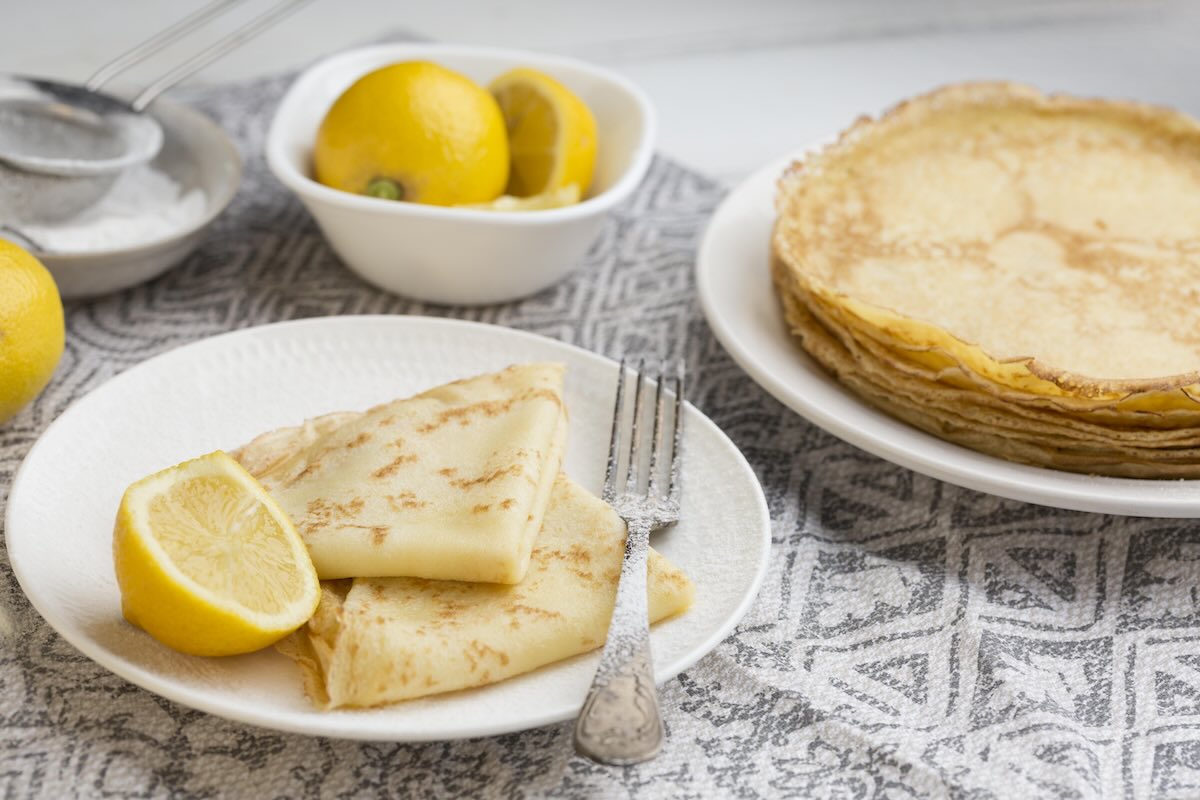
February 2 is La Chandeleur — basically a national crêpe festival. If you’re curious about the traditions and fun superstitions behind it, Llarn more about this French holiday: Enjoy La Chandeleur, the Delicious Crêpe Day.
Tradition says flipping your crêpe while holding a coin brings good luck. Whether or not it works… you still get crêpes. So everyone wins!
3. Spring Traditions and Holidays
Easter in France (Pâques) is a blend of faith, family, and tradition.
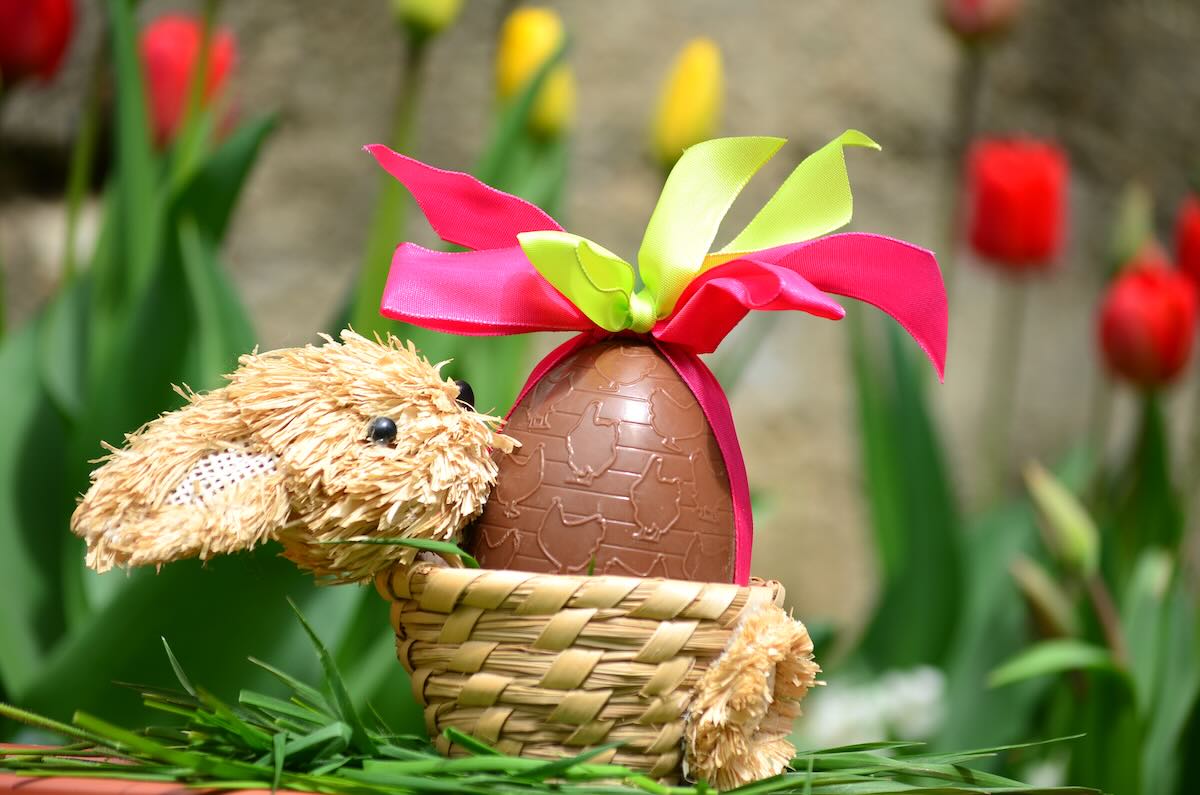
Children search for chocolate delights in gardens, leading to joyful egg hunts. Families usually celebrate with a long Sunday lunch — often featuring roast lamb, seasonal vegetables, cheese, and (of course) plenty of chocolate. Because Easter Monday is a public holiday, many people also enjoy a relaxing long weekend.
If you’d like to go deeper into French Easter traditions, read my guide: How to Talk About Easter in French. It’s perfect for learners, expats, and anyone curious about celebrating Pâques in France.
May 1: Labour Day and Lily of the Valley
May 1 is la Fête du Travail. It is both a day associated with workers’ rights and the day when people offer sprigs of lily of the valley, du muguet, as a symbol of good luck.
You will often see temporary stalls selling the small white flowers. Many shops and services close, so buy groceries and check transport arrangements in advance.
You can say:
- Je vous offre un brin de muguet. (I am giving you a sprig of lily of the valley.)
- Ça porte bonheur. (It brings good luck.)
May also includes May 8, Ascension Day and Whit Monday. With several public holidays close together, opening hours, school schedules and traffic can change considerably.
4. Summer Celebrations and the Holiday Season
July 14: The French National Day
Bastille Day on July 14 is France’s national day, celebrating the French Revolution.
It’s festive, proud, and a fantastic time to observe French community spirit. The day features military parades, fireworks, and public dances (bals des pompiers). Shops and offices may close, especially in smaller towns.
Useful vocabulary:
-
La Fête Nationale (f) (Bastille Day)
-
Un défilé militaire (m) (a military parade)
-
Des Feux d’artifice (m) (fireworks)
- Le bal des pompiers (m) (lively fire-station dances)
La Fête de la Musique
It’s not a public holiday but rather a nationwide music festival held every year on June 21 (the summer solstice).
The spirit of the day:
-
Most of the events are free
-
Open-air stages
-
Bars and restaurants spill onto the streets
-
People wander around listening to different styles
Professional bands, teenagers with guitars, orchestras, DJs — everyone is encouraged to play in the streets, parks, cafés, and public squares.
July and August: France's Summer Rhythm
The summer holiday season strongly affects everyday life. Many people take annual leave in July or August, and some independent shops, medical practices and restaurants close for several weeks.
You may see signs such as:
- Fermeture annuelle (Annual closure)
- Fermé pour congés (Closed for holidays)
- Réouverture le 26 août (Reopening on August 26)
Tourist areas can be extremely busy, while some business districts become unusually quiet. Confirm appointments and opening hours, especially in August.
5. Autumn Traditions and Days of Remembrance
La Rentrée: The Real Beginning of the Year
September marks la rentrée, the moment schools reopen, activities restart, and life picks up again.
For expats, it’s the perfect time to :
- join local classes
- sign up for sports or hobbies
- practice French and meet people
For expats, la rentrée is a useful time to join a class, register with a local association or start a new activity. Places can fill quickly, so look for information in late August or early September.
You may hear:
- Bonne rentrée ! (Have a good start to the new school or work year!)
- Tu t’inscris à une activité cette année ? (Are you signing up for an activity this year?)
La Toussaint
All Saints’ Day, la Toussaint, falls on November 1 and is a public holiday. Families may visit cemeteries and place chrysanthemums on relatives’ graves. The atmosphere is generally quiet and reflective.
Because chrysanthemums are so closely associated with cemeteries in France, they are not the usual choice for a cheerful dinner invitation or romantic bouquet.
School holidays around this period are also commonly called les vacances de la Toussaint.
Armistice Day
November 11 commemorates the 1918 Armistice and the end of the First World War. Local ceremonies often take place at the monument aux morts, with wreaths, flags and a minute of silence.
This is a solemn public holiday rather than a festive celebration. Town halls usually publish the time and location of local commemorations.
6. Christmas Traditions in France
France’s holiday season is full of simple, heart‑warming traditions.

You’ll find charming Christmas markets (marchés de Noël) filled with artisanal treats and festive atmosphere. Generally locals sip vin chaud and browse handcrafted gifts. Families come together for extended dinners — frequently showcasing indulgent appetizers such as oysters, foie gras, and smoked salmon.
Then, the feast transitions to turkey and various other treats.We then finish with the iconic bûche de Noël cake for dessert.
Rather than big flashy displays, the atmosphere is more intimate and centered on food, conversation, and togetherness.
Useful expressions include:
- Joyeux Noël ! (Merry Christmas!)
- Vous faites quelque chose pour le réveillon ? (Are you doing anything for Christmas Eve?)
- On décore le sapin ce week-end. (We are decorating the Christmas tree this weekend.)
Explore more seasonal language in French Christmas Vocabulary: 50+ Essential Words and Phrases.
7. Everyday French Traditions and Social Customs
Not every important French tradition appears on a calendar. A few everyday habits can make social interactions much easier.
Say bonjour before asking for something
When you enter a small shop, bakery, waiting room or reception area, greet the person before making a request. Beginning immediately with a question can sound abrupt.
Compare:
- Bonjour, je voudrais une baguette, s’il vous plaît. (Hello, I would like a baguette, please.)
- Bonjour Madame, excusez-moi, vous fermez à quelle heure ? (Hello, excuse me, what time do you close?)
When leaving, add Merci, au revoir or Bonne journée.
Enjoy l’apéro
Short for l’apéritif, l’apéro is the relaxed time before a meal when people share a drink and small snacks. It can be a quick moment before dinner or become an apéro dînatoire with enough food to replace a formal meal.
If someone says On prend l’apéro ?, they are inviting you to sit, talk and have something to drink. Alcohol is not obligatory; soft drinks and alcohol-free options are perfectly possible.
Take time over meals
Meals with family or friends may last longer than new arrivals expect, especially at weekends or on public holidays. Courses arrive gradually, and conversation is part of the occasion.
If you are invited to someone’s home, ask whether you can bring something. Flowers, chocolates or a speciality from your region can be appropriate, but it is always safest to follow your host’s suggestion.
Visit local markets and community events
Weekly markets, village festivals, neighbourhood associations and town-hall events are excellent places to understand local life. Traditions vary considerably between regions, so asking questions is often the best way to learn.
Try:
- C’est une tradition de la région ? (Is this a regional tradition?)
- Depuis quand est-ce que cette fête existe ? (How long has this festival existed?)
- Vous y allez chaque année ? (Do you go every year?)
8. Practical Tips for Expats in France
Understanding French holidays (les jours fériés) is part of learning the real rhythm of expat life in France. Therefore you could try to :
-
Add French public holidays to your calendar so you can plan work, school, and travel smoothly.
-
Ask locals questions — they love sharing the stories behind their traditions.
-
Say yes to invitations for family meals, festivals, or neighborhood gatherings.
-
Learn key French vocabulary linked to major holidays to feel more confident in conversations.
Feel More at Home in French
Would you like to speak more confidently in shops, at work, with neighbours or during local celebrations? In personalised French lessons, we can practise the language and cultural situations that matter most in your daily life.