
How to Study for a French Exam: A Practical Step-by-Step Plan
Knowing how to study for a French exam can feel overwhelming, especially when you need to improve your speaking, writing, listening and reading skills at the same time. The key is to follow a clear preparation plan rather than revising everything at once.
Whether you are preparing for the DELF, DALF, TCF, TEF or another French test, this guide will take you through each stage, from organising your revision several weeks in advance to managing the day of the exam. If you would like personalised support, my online French exam preparation classes are tailored to your level, exam and available study time.

1. Understand the French Exam Format
Firstly, before your preparation for the DELF/DALF exam, it’s essential to understand its format. DELF (Diplôme d’Etudes en Langue Française) and DALF (Diplôme Approfondi de Langue Française) are the only French as a foreign language diplomas issued by the French Ministry of Education.
Then, knowing your level in French will help you decide which exam is more suitable. The DELF exam consists of 4 levels (A1, A2, B1 and B2) whereas the DALF is divided into 2 levels (C1 and C2).
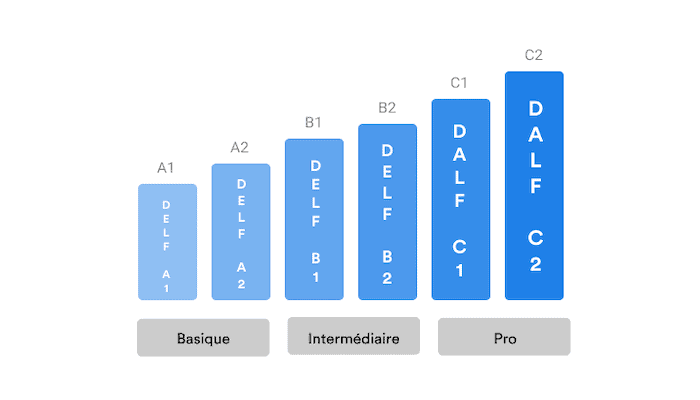
Also, each level has a specific set of language skills and competencies that need to be mastered as follows :
- Listening comprehension
- Reading comprehension
- Written expression
- Oral expression
Each section has a set duration, format, and tasks that can change from one year to another. Understanding the exam format will help you develop a study plan and be more prepared on exam day.
2. Create a Realistic Study Plan
Once you understand the format of your exam, create a realistic preparation plan based on your current level, learning style and availability. If you work full time and can only study for one hour per week, for example, you may need several months rather than a few weeks to prepare.
Cramming at the last minute can be stressful and ineffective. Instead, divide your preparation into manageable stages:
- Several weeks before the exam: identify your strengths and weaknesses, then organise weekly study sessions covering listening, reading, writing and speaking;
- One week before the exam: complete a full practice test under timed conditions and review your mistakes;
- The day before the exam: revise only your key notes, prepare everything you need and get enough rest;
- On exam day: arrive early, read every instruction carefully and keep track of your time during each task.
Studying consistently over a longer period will help you make steady progress and approach the exam with greater confidence.

3. Practise Under Exam Conditions
Use a grammar book suited to your level (see our guide to the Best French Grammar Books for Every Level) alongside reliable online resources to strengthen your language skills. You can also find plenty of sample tests on YouTube. Practising with exam-style exercises will help you become familiar with the format and build your confidence.
Practise all four skills and gradually introduce time limits so that you become familiar with the pace of the exam. Complete listening and reading exercises without pausing, write full answers within the allotted time and rehearse speaking tasks aloud.
Do not simply complete an exercise and move on. Review every mistake, note recurring grammar or vocabulary problems and repeat similar tasks until you feel more confident. Whenever possible, have your written and oral work corrected by a qualified teacher so that you understand exactly how to improve.

4. Don’t Neglect French Grammar
Furthermore, grammar is the foundation of any language, and French is no exception, sorry! I know this may not be the most enjoyable part of learning, but a solid understanding of French grammar rules is essential for achieving good results.
My best advice is to make sure you feel confident with the following topics:
- The main French tenses you need to know: present, past and future;
- Asking questions;
- French connectors expressing time, purpose, cause and consequence;
- Forming negative sentences;
- Pronouns: personal, direct and indirect object, possessive and demonstrative;
- Adjectives and adverbs;
- French prepositions.

5. Expand your French vocabulary
A broad vocabulary is essential for communicating effectively in French. For the exam, you will need to know a wide range of words and expressions to:
- Understand written and spoken French during the comprehension tests;
- Express your ideas accurately in both the written and speaking sections.
Make time to review new vocabulary and use it actively in conversations. You can also create themed lists or flashcards whenever you encounter unfamiliar words while watching French films, reading books or studying. Regularly revisiting and using these words will help you remember them and communicate more confidently.
6. Practise Speaking With Native French Speakers
As you may already know, speaking is an essential part of the DELF and DALF exams. You need to communicate clearly and effectively, using accurate pronunciation, intonation and grammar.
Therefore, you should practise speaking regularly, preferably with native French speakers. You can also use online tools and apps and follow these seven tips to improve your French pronunciation skills. Record yourself speaking and listen carefully to identify areas for improvement. You could also join French conversation groups through Meetup or Facebook.

7. Get Personalised Feedback From a French Tutor
Finally, you can blend this training with a few one-on-one classes with a professional. If you are still struggling with the language, you could consider hiring a French tutor. A private teacher can provide you with tailor-made guidance and can help you expand your French knowledge.
In our French exam preparation courses, your professional tutor will identify your strengths and work on your weaknesses. He/she will guide you through all the different aspects to ace your exam. You will practice with mock exams and exercises from past papers and you will gain tailored tips and tricks to maximize your results!
Prepare for Your French Exam with Confidence
Passing a French exam is not about revising everything at the last minute. A clear schedule, regular practice and familiarity with the exam format will help you make steady progress and feel more confident on the day.
If you would like personalised support, I can create a preparation plan based on your exam, current level and available time. During our lessons, we can focus on speaking and writing, while listening and reading activities can be completed at home under timed exam conditions.
Comments are closed.