
Easter in French: Essential Vocabulary, Phrases and Traditions
Easter, known as Pâques in French, combines religious celebrations, family gatherings and traditions that may be unfamiliar to visitors. In France, children traditionally wait for the flying Easter bells rather than only the Easter bunny, before searching for chocolate eggs hidden in gardens and parks.
Learning expressions such as Joyeuses Pâques and les cloches de Pâques will help you talk about the celebration and understand French culture more easily. You can also practise vocabulary connected with French traditions and everyday life in my private French conversation classes.
In this guide, you will learn essential French Easter vocabulary and useful phrases, while discovering some of the most familiar Easter traditions and foods in France.
1. How Do You Say Easter in French?
In France, Pâques has both religious and cultural significance. The holiday celebrates the resurrection of Jesus Christ, but it is also a time when many families gather and share familiar traditions. Like the galette des rois, Easter brings together French culture, food and family customs. Understanding its background and related vocabulary will help you talk about the celebration more naturally in French.
1.1 Pâques or la Pâque?
When referring to the Christian festival itself, Pâques is normally masculine singular and used without an article:
- Pâques est tombé tôt cette année. — Easter fell early this year.
- Nous nous retrouverons à Pâques. — We will get together at Easter.
- Que fais-tu pour Pâques ? — What are you doing for Easter?
However, the word behaves as feminine plural in certain familiar expressions, including:
- Joyeuses Pâques ! — Happy Easter!
- les fêtes de Pâques — the Easter celebrations
- les vacances de Pâques — the Easter holidays
By contrast, la Pâque is feminine singular and refers to the Jewish festival of Passover:
- la Pâque juive — Jewish Passover
This distinction explains why you say Pâques without an article when discussing Easter, but la Pâque when referring to Passover.
1.2 French Easter Greetings
The most natural way to wish someone a happy Easter is:
Joyeuses Pâques ! — Happy Easter!
You may also hear or write:
- Bonnes fêtes de Pâques ! — Have a lovely Easter!
- Je te souhaite de joyeuses Pâques. — I wish you a happy Easter.
- Passez un bon week-end de Pâques ! — Have a lovely Easter weekend!
These expressions work well in messages, cards and conversations with friends, relatives or colleagues.
2. Essential French Easter Vocabulary
Knowing the right vocabulary and phrases can enhance your conversations about Easter in French. Here are some essential greetings and descriptions related to the holiday.
2.1 Lexicon of Easter and Lent
When discussing Easter and Lent in French, certain terms are essential. Here’s a quick list of important words:
- Easter: Pâques
- Lent: Le Carême
- Easter Sunday: Dimanche de Pâques
- Good Friday: Vendredi Saint
- Easter Monday: Lundi de Pâques
- Holy Week: La Semaine Sainte
- Palm Sunday: Dimanche des Rameaux
- Ash Wednesday: Le Mercredi des Cendres
- A Bank Holiday: un jour férié
These terms help describe the rituals and traditions around Easter. Families often gather for celebrations, feasting, and egg hunting, making this time both religious and communal. Understanding this language enriches your conversations about the holiday.
2.2 Easter Eggs, Chocolate and Spring Vocabulary
| English | French |
|---|---|
| an Easter egg | un œuf de Pâques |
| an Easter egg hunt | une chasse aux œufs |
| Easter bells | les cloches de Pâques |
| an Easter bunny | un lapin de Pâques |
| a chick | un poussin |
| a hen | une poule |
| a lamb | un agneau |
| a chocolate mould | un moulage en chocolat |
| a basket | un panier |
| a daffodil | une jonquille |
| spring holidays | les vacances de printemps |
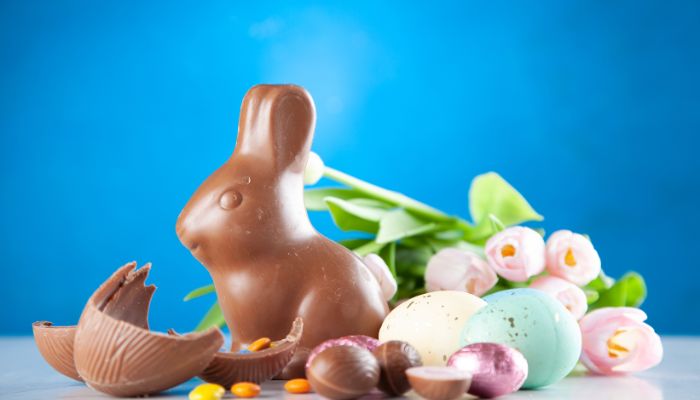
Chocolate shops and supermarkets display eggs, bells, hens, rabbits, chicks and fish in many shapes and sizes. Daffodils and other spring flowers are also often used to decorate Easter tables.
3. French Easter Traditions
Easter in France brings together religious observances, family gatherings and customs passed down through generations. From the flying bells to Easter egg hunts, these traditions offer an interesting insight into French culture. If you are discovering life in France, Easter is one of the French traditions and holidays every new expat should know.
3.1 The enchanting Easter Bells
First, we celebrate Easter with a unique magical creature: the enchanting Easter bells ! These delightful beings are known as “les cloches de Pâques”. According to legend, church bells fly to Rome on Good Friday and return on Easter Sunday, bringing chocolate eggs for children. This adds a magical touch to the celebration.
You might also notice in some regions un Défilé Pascal or une parade de Pâques, where communities hold Easter processions. These events often feature music, colorful decorations, and a sense of unity among participants.
3.2 Easter Egg Hunt
An Easter egg hunt is called une chasse aux œufs. Families hide chocolate eggs and figures in their homes or gardens, and many towns, parks, castles and associations organise larger hunts for children.
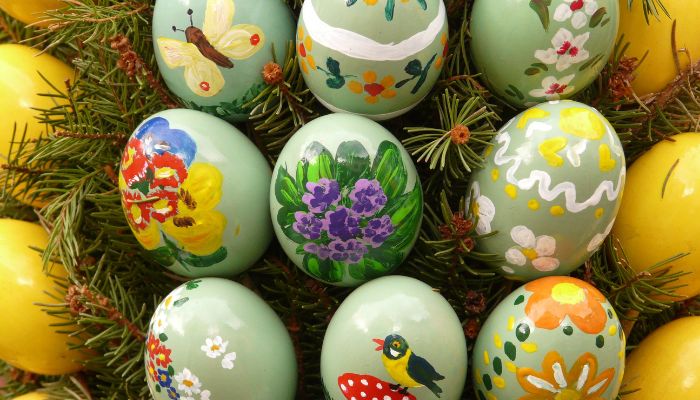
In the past, families also decorated real hard-boiled eggs, sometimes using natural dyes. Chocolate has now largely taken their place, with hens, bells, rabbits, lambs and chicks appearing alongside the traditional eggs.
Useful phrases during an Easter egg hunt include:
- Cherche bien dans le jardin ! — Look carefully in the garden!
- J’ai trouvé un œuf en chocolat ! — I found a chocolate egg!
- Combien d’œufs en chocolat as-tu trouvés ? — How many chocolate eggs did you find?
- N’oublie pas ton panier. — Don’t forget your basket.
3.3 Easter Monday and the Spring Holiday
Le lundi de Pâques is a public holiday in France. For many people, it creates a three-day weekend, although whether someone works depends on their job and employer. The current dates can be checked on the official French government public holiday calendar.
You may know the useful French expression faire le pont, meaning to take an extra day off between a public holiday and a weekend. Easter Monday already follows the weekend directly, so French people do not normally need to faire le pont for it.
The school holidays around this period are officially called les vacances de printemps. People still sometimes use the traditional name les vacances de Pâques in everyday conversation. The dates vary between zones A, B and C, helping to spread journeys and holiday travel across several weeks.
Would You Like to Talk About French Culture with Confidence?
In my private French conversation classes, you can practise useful vocabulary while discussing French traditions, celebrations and everyday life.
4. Traditional Easter Food in France
At the heart of Easter celebrations in France are the traditional foods that grace the festive table. Easter is among the many culinary celebrations celebrated in France such as the crêpes for La Chandeleur or the beignets for Carnival.
4.1 Traditional Easter Fare
Food plays a central role in Easter celebrations. Typically, the table is filled with life, featuring pots of bright daisies and other spring flowers, where green and yellow hues dominate. Many people also like to add Easter eggs to enhance the table’s decoration.
A traditional dish you might encounter is Gigot d’agneau, which is roasted leg of lamb served with seasonal vegetables. The lamb symbolizes purity, sacrifice and the resurrection of Christ. It’s a fitting centerpiece for the Easter meal and is often served with asparagus, which is in season during spring.
Enjoying these foods helps connect you with the holiday’s traditions and meanings. For more inspiration, here is a great selection of 50 recipes for a traditional Easter meal in France.
4.2 Delicious Easter desserts
Many families enjoy a delightful dessert called “gâteau de pâques”, a sponge cake that is often decorated with Easter-themed decorations like chocolate eggs and bunnies.
We can also find a special Easter cake, often formed into a ring or a lamb shape. Its buttery brioche texture is sometimes enhanced with bits of candied fruit or sprinkled with pearl sugar, adding a lovely sweetness to the celebration.
Finally some regions have very specific dessert such as “Cornuelles” or “gâteau des Rameaux” in the South West of France. The Palm Sunday cake, also known as “pine,” is made from choux pastry and is flavored with orange blossom or cognac. It can be filled or unfilled with whipped cream, and it delights both the taste buds and the eye with its phallic shape.
4.3 Regional Easter Specialities
Some regional pastries are eaten around Palm Sunday and Easter. In Charente and neighbouring areas of South-West France, bakeries sell des cornuelles. These triangular shortbread biscuits have a hole in the centre and are traditionally decorated with small pink and white aniseed sweets.
The central hole was once used to hold a sprig of blessed boxwood for Palm Sunday. The triangle has also been associated with the Holy Trinity, although other explanations connect the pastry with older spring and fertility traditions.
Another particularly distinctive Charentais speciality is la pine, a choux pastry that may be flavoured with orange blossom or Cognac and filled with cream. Its deliberately phallic shape reflects the playful survival of older springtime traditions. These local pastries show how Easter customs can vary considerably from one French region to another.
If you enjoy discovering local specialities, explore my guide to regional French pastries for more traditional treats from across France.
5. Useful French Easter Phrases
Here are some complete phrases that you can reuse when speaking about Easter plans, traditions and food:
- Comment allez-vous fêter Pâques ? — How are you going to celebrate Easter?
- Tu fais quoi pour Pâques ? — What are you doing for Easter?
- Nous allons déjeuner en famille. — We are going to have lunch as a family
- Nous organisons une chasse aux œufs pour les enfants. — We are organising an Easter egg hunt for the children
- Les cloches sont passées ! — The Easter bells have been
- Combien d’œufs en chocolat as-tu trouvés ? — How many chocolate eggs did you find?
To make these expressions easier to remember, choose three or four and adapt them to your own plans. You could describe what you will eat, who you will see or whether your town organises an egg hunt.
Celebrate Easter in French
Talking about Easter in French is a useful way to combine language and culture. With words such as Pâques, une chasse aux œufs and un jour férié, you can describe the celebrations, understand French traditions and take part in seasonal conversations more confidently.
You do not need to memorise every word at once. Begin with Joyeuses Pâques ! and a few expressions connected with your own Easter plans, then practise using them in complete sentences.
Would you like to develop your vocabulary and speak French more naturally in lessons adapted to your level and interests? I would be delighted to help you work towards your goals.
Comments are closed.