
La Chandeleur in France: Traditions, Crêpes and Vocabulary
Every year on February 2, kitchens across France fill with the smell of warm butter and freshly cooked crêpes. This is la Chandeleur, a traditional celebration known as Candlemas in English. Although the occasion has religious origins, most people in France now associate it with preparing and sharing crêpes with family or friends.
Why crêpes? Their round, golden appearance is often said to evoke the sun and the gradual return of longer days. They have also become connected with several amusing customs, including flipping a crêpe while holding a coin in the other hand.
In this guide, you will discover the meaning and traditions of la Chandeleur, along with useful French vocabulary, popular fillings and a simple recipe. Exploring celebrations like this is also a natural way to discuss French culture during French conversation lessons.
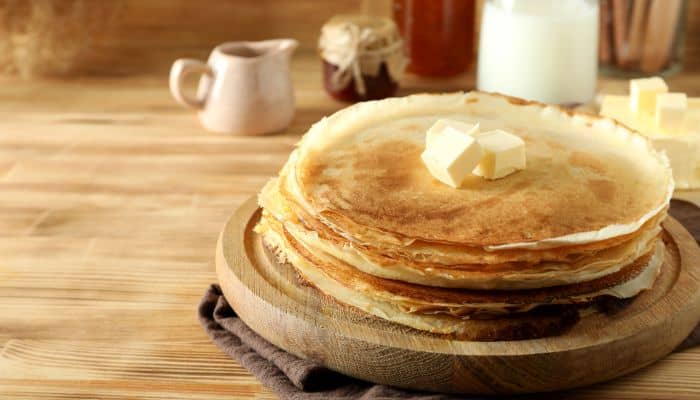
1. What Is La Chandeleur and When Is It Celebrated?
La Chandeleur is celebrated on February 2, exactly 40 days after Christmas. Its English name is Candlemas, while the French word is linked to une chandelle, meaning a candle.
In the Christian calendar, the date commemorates the Presentation of Jesus at the Temple. Candles traditionally represented light during the celebration, explaining the name la fête des chandelles, or the festival of candles.
La Chandeleur is not a public holiday in France, so shops, schools and workplaces remain open. Today, many households primarily associate it with making and eating crêpes.
You may hear people say:
- C’est la Chandeleur ! (It’s Candlemas!)
- La Chandeleur a lieu le 2 février (Candlemas takes place on February 2).
- Pour la Chandeleur, on fait des crêpes. (We make crêpes for Candlemas).
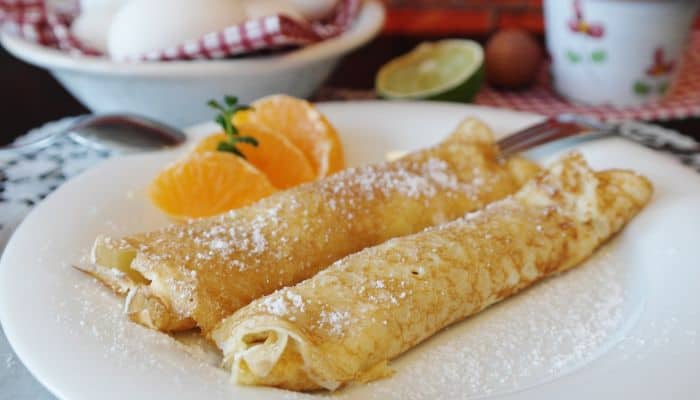
2. French Traditions and Superstitions for La Chandeleur
La Chandeleur is accompanied by several customs and sayings. They are not followed seriously by everyone, but they remain a fun part of the celebration.
Flipping a Crêpe While Holding a Coin
According to a popular superstition, you should hold a coin in your left hand while flipping the first crêpe with the pan in your right hand. If the crêpe lands correctly, your household should enjoy prosperity during the year ahead.
Older versions mention keeping a gold coin inside the crêpe until the following year. Today, most people attempt the challenge simply for fun.
Useful vocabulary includes:
- faire sauter une crêpe (to flip a crêpe into the air)
- tenir une pièce (to hold a coin)
- retourner une crêpe (to turn a crêpe over)
- porter bonheur (to bring good luck)
A Traditional Weather Saying
La Chandeleur has also inspired sayings about the weather. One well-known example is:
À la Chandeleur, l’hiver se meurt ou prend vigueur.
This means: “At Candlemas, winter either dies or grows stronger.” It reflects the uncertain weather at the beginning of February.
And la Chandeleur is not the only food-centred celebration during the French winter. Just a few weeks earlier, families and friends celebrate Epiphany by sharing a traditional Galette des Rois.
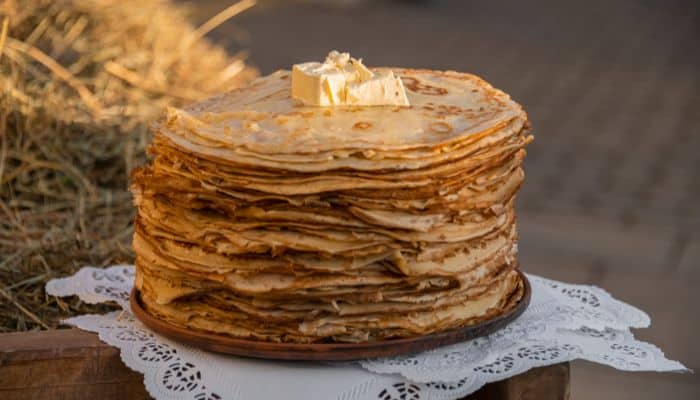
3. Learn the perfect French vocabulary for la Chandeleur
Here is the vocabulary you are most likely to encounter when reading a recipe or preparing crêpes with French speakers.
Crêpe or Galette?
In everyday usage, une crêpe generally refers to a thin pancake made with wheat flour and often served with a sweet topping. Une galette commonly refers to the savoury Breton version made with buckwheat flour, although terminology can vary within Brittany.
- une crêpe sucrée (a sweet crêpe)
- une galette de sarrasin (a buckwheat galette)
- une crêpe salée (a savoury crêpe)
- la pâte à crêpes (crêpe batter)
- une garniture — a filling or topping
Brittany is particularly famous for crêpes, buckwheat galettes and the cider often served with them. You can discover more Breton specialities in my guide to regional French pastries.
Ingredients
- du beurre : butter
- la confiture : jam
- de la farine : flour
- de la farine de sarrasin : buckwheat flour
- de l’huile : oil
- du lait : milk
- des oeufs : eggs
- de la pâte à tartiner au chocolat : chocolate spread
- du sel : salt
- du sucre : sugar
Notice the use of the partitive articles du, de la and des. They are commonly used when referring to an unspecified quantity of food: du sucre, de la farine and des œufs.
Cooking Verbs
- ajouter : to add
- chauffer : to heat
- cuire : to cook
- fondre : to melt
- fouetter : to whisk
- mélanger : to mix
- retourner : to flip
- verser : to pour
Kitchen Equipment
- une assiette : a plate
- un fouet : a whisk
- une louche : a ladle
- une poêle : a frying pan
- un saladier / un bol : a bowl
- une spatule : a spatula
Want to Use French More Confidently?
Learning vocabulary through traditions makes it easier to remember, but conversation helps you turn those words into active language. In private lessons, we can practise French through topics connected with your interests, everyday life and personal goals.
4. Popular Sweet Crêpes and Savoury Galettes
Crêpes can become simple desserts or complete meals, depending on their filling.
Sweet crepes
- Sugar crêpes : These are the traditional ones, sprinkled with sugar
- Chocolate crêpes : For chocolate lovers, these crêpes can be filled with Nutella or even better hot melted chocolate
- Crêpes Suzette : Made with a sauce of caramelized sugar and butter, orange juice, zest, and Grand Marnier, triple sec or orange Curaçao liqueur on top, flambéed tableside
- Banana crêpes : Filled with fresh bananas, sometimes with ice-cream, chantilly and/or hot chocolate too
- Crêpes chantilly : Crêpes served with a generous serving of whipped cream
- Salted butter crêpes : If you have a sweet tooth, this is the perfect choice, made with a salted butter sauce
- Gâteau de crêpes : Like a mille-feuille, this crêpes cake is made layers upon layers of paper-thin crepes and velvety ganache
Savoury galettes
- Ham and Cheese galette : Probably the most popular savoury varieties, filled with cooked ham and melted cheese.
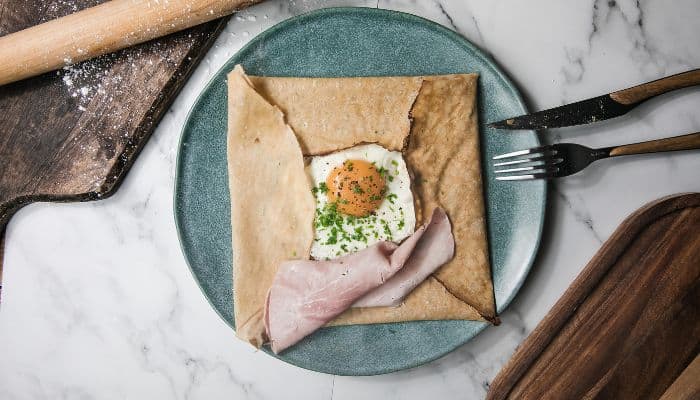
- Galette complète : If you add an egg to the ham and cheese, you’ll get this awesome galette
- Mushroom galette : The best vegetarian option, filled with sautéed mushrooms, cheese, and herbs
- Galette goat cheese and honey : It’s a great combination of sweet and savoury tastes
- Salmon galette : For a lighter option, you could add salmon or any seafood you enjoy
- Galette tartiflette : A very wintery galette made with potatoes, reblochon cheese, fresh cream, diced bacon and chive
5. A Simple French Crêpe Recipe
This recipe makes approximately 12 thin crêpes. If you plan to serve them with savoury fillings, simply leave out the sugar.
Ingredients
- 250 g of flour — 250 g de farine
- 4 eggs — 4 œufs
- 500 ml of milk — 500 ml de lait
- 50 g of melted butter — 50 g de beurre fondu
- 1 tablespoon of sugar, optional — 1 cuillère à soupe de sucre
- 1 pinch of salt — 1 pincée de sel
Method
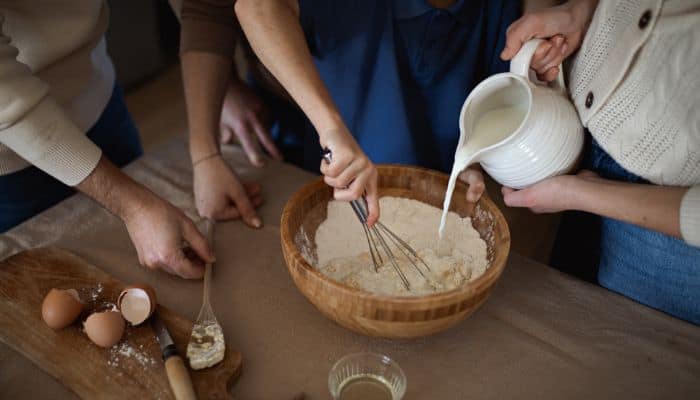
- Put the flour in a mixing bowl and make a well in the centre: Versez la farine dans un saladier et faites un puits au centre.
- Add the eggs, then gradually pour in the milk while whisking: Ajoutez les œufs, puis versez progressivement le lait en fouettant.
- Add the melted butter, sugar and salt. Mix until the batter is smooth: Ajoutez le beurre fondu, le sucre et le sel. Mélangez jusqu’à obtenir une pâte lisse.
- Let the batter rest for approximately 30 minutes: Laissez reposer la pâte pendant environ 30 minutes.
- Pour a small ladleful into a hot, lightly buttered pan. Cook both sides: Versez une petite louche de pâte dans une poêle chaude légèrement beurrée. Faites cuire des deux côtés.
If the batter is too thick, add a little more milk. Do not worry if the first crêpe is difficult to flip!
Looking for more inspiration? Explore additional crêpe recipes on Marmiton or discover the sweet and savoury filling ideas below. Bon appétit!
6. Celebrate La Chandeleur the French Way
La Chandeleur combines history, popular customs and one of France’s most accessible culinary traditions. A frying pan, a few basic ingredients and your favourite filling are enough to participate.
Whether you choose a crêpe au sucre, a crêpe Suzette or a galette complète, the most important part is enjoying the moment together.
When ordering, you can say:
- Je voudrais une galette complète, s’il vous plaît. (I would like a galette complète, please).
- Qu’est-ce que vous avez comme garnitures ? (What fillings do you have?)
- Je vais prendre une crêpe au sucre. (I’ll have a sugar crêpe).
- Tu préfères une crêpe sucrée ou une galette salée ? (Do you prefer a sweet crêpe or a savoury galette?)
Would You Like to Explore French Through Culture?
I offer personalized one-to-one French lessons adapted to your level, interests and communication goals. We can use traditions, food and everyday situations to help you develop French that feels relevant and natural.
Comments are closed.